
Boom! Welcome to Books & Biceps, the only newsletter for Sophisticated Meatheads where I share updates on my upcoming books and projects, weekly book recs, interviews with my fellow authors, workout motivation, sports stuff and more. If someone forwarded you this email: Join 30,000+ other readers here.
BOOKS

Brad Thor is a legend. His books are everywhere: Airports. Independent stores. Big box stores like Barnes & Noble. Thor’s books always take up prime real estate, have cool displays, sell out fast and have fans wanting the next one as soon as they finish. It’s what every author aspires to and it’s inspiring and awesome to see. I’ve always had it in my head to start reading Thor’s famous Scot Harvath novels and funny enough, it was a different book of Thor’s that reminded me to finally dive in: Cold Zero, a book he wrote with Ward Larsen. I picked up that book on a whim because of the cool cover, read it in about three nights (big concept, cool scenes, like a modern Hunt for Red October and Crimson Tide and The Grey… read that one too!") and finally said to myself, “It’s time for me to introduce myself to Scot Harvath (Thor’s main character).”
I am so glad I did. Even better, when I finished, my buddy and book publicist extraordinaire, David Brown, set up a Books & Biceps interview with Brad. So cool. Thor’s written 25 Harvath books, so if you’re a longtime fan, you’ll love this interview. And if you haven’t read one yet, make Choke Point your first. It rules.
Please enjoy our exclusive behind-the-book interview below. Thor shares some deep, inside-author stuff that you’re really going to love:
ONE
FINKEL: Before we get into the character of Rick Morrell, I have to ask you about his name. Did you use the last name Morrell in homage to the one-and-only David Morrell? First Blood is one of my all-time favorite books, so naturally it was on my mind. If not, where do you usually pull your names from? Do you have a list of them jotted down over time that sound cool and you use them as you begin new books?
THOR: First, I’m glad Choke Point worked as your first Harvath thriller. I always tell people my books are like the James Bond movies. You don’t have to have seen every Bond film to walk into the newest one and have a great time. You’ll get caught up quickly, and then you’re off to the races.
As for Rick Morrell, he was not named after David Morrell, though David and I have been good friends for many, many years. The name actually comes from a friend of mine, Geoff Morrell, who served as the Pentagon press secretary under Secretary of Defense Robert Gates.
I do pull names from people in my life. Quite a few characters in my books are named after friends, family members, or people I’ve crossed paths with over the years. Scot Harvath is a good example. “Scot” comes from my brother, Scot, and “Harvath” comes from a dear friend of ours who worked at the Justice Department processing FISA warrants - Foreign Intelligence Surveillance Act warrants - which are particularly useful in monitoring the communications of foreign terrorists and other threats overseas.
For me, names have to feel authentic. They need to sound like they belong in the world I’m writing about. Sometimes that means inventing them. Other times, it means borrowing from real life.
TWO
Now, onto the character himself: Rick “The Prick” Morrell. I enjoyed the hell out of this guy. He must be so much fun to write. I realize now that he’s a semi-regular character in the Harvath series, so you’ve been dialing him in for a long time. I won’t give too much away regarding Choke Point, but you give him some spectacular one-liners throughout the book. He’d fit perfectly in a buddy cop movie…
He’s got a little Martin Riggs in him from Lethal Weapon as well. Where did the idea for this character come from and do you try out different jokes/one-liners as you edit? For instance, after the first quip comes to mind as you write, do you punch it up a few times with other options?
I’m really glad you enjoyed Morrell so much. Actually, he hasn’t appeared on the page since my second Harvath novel, Path of the Assassin. There’s a quick reference to him in my third book, State of the Union, but readers really haven’t seen him since the beginning of Harvath’s career.
Because Choke Point is my twenty-fifth Scot Harvath novel, I wanted to do something special for longtime fans. As I was thinking about what would be fun, I kept coming back to the idea of bringing back a character readers hadn’t seen in a very long time. Morrell was a natural. I loved writing him all those years ago, and he felt like exactly the kind of guy who could plausibly turn up in Bangkok.
Thailand is a part of the world where Harvath has never operated before, so there’s already a fish-out-of-water element built into the story. Then I thought, what could make that even more complicated? The answer was: have him run into a guy with whom he has a strained history.
Over the years, Harvath and Morrell have developed a certain professional respect for each other, but they’re also both smartasses. Harvath began as a huge smartass, and Morrell was one too, so putting them back together let me deepen the relationship while also letting the humor rip.
There’s something funny about Morrell having been tucked away in the Bangkok CIA station. When Harvath steps off the plane and sees him, you can almost feel the eye roll: “Jesus, this guy.” That was a lot of fun for me.
I like banter. I like humor. And I especially like humor when it’s under pressure. There’s an expression the French have - l’esprit de l’escalier, the wit of the staircase - where you leave a dinner party or cocktail party and only then, on the stairs, think of the perfect comeback. The great thing about being an author is that I control the universe. I don’t have to let the perfect reply arrive too late. I can put it right there on the page at exactly the right moment.
So yes, I absolutely work on the one-liners. I’ll punch them up, sharpen them, and try different versions. If I’m going to take the time to craft a joke, I want it to be a damn good joke. I’m pretty proud of the humor in Choke Point. There’s a lot of action, but the Morrell-Harvath relationship gave the book an extra spark.
THREE
I won’t give away too much about a particular scene, but you’ve got a pivotal sequence in here that involves Harvath’s knowledge of Nysten’s Rule (super interesting) that was high stakes but also made me think of Weekend at Bernies. Was that your inspiration haha? The details were very cool. Had you been holding onto Nysten’s Rule for a long time in your writing and finally decided it was time to break it out?
Nysten’s Rule is pretty interesting, isn’t it?
Thriller authors tend to have brains like flypaper for strange facts; the kind of things readers don’t expect to come around the next corner. I call what I do “faction,” because, ideally, you don’t know where the facts end and the fiction begins.
I love that the scene made you think of Weekend at Bernie’s, but no, that wasn’t the inspiration. What interested me was the problem Harvath faced. He had a dead man who was going to be seen, and he needed that dead man to appear as if he might still be alive - even if unconscious. That’s exactly the kind of corner I like painting myself into as a thriller author.
Normally, I take the first four ideas that come to me and throw them out. If I can think of those ideas that quickly, the reader probably can too. So I force myself to move past the obvious solutions and find something more unexpected.
In this case, Harvath needed the dead man’s superiors to believe he was still alive, so they would come retrieve him. I had known about Nysten’s Rule for a while. It was one of those facts I had tucked away - like the junk drawer everybody has in the kitchen, where there’s a little bit of everything. I knew I wanted to use it someday, and Choke Point gave me the perfect opportunity.
FOUR
I’m a sucker for learning random, real world information from characters in books because that character also picked up the information and shared it in conversation. I know you clearly did a ton of research on Thailand and Bangkok for this book. The conversation towards the end, where Morrell is sharing a bunch of tidbits about the city, like that it used to be called the Venice of the East and that it has sixteen hundred canals, was right up my alley. How did you decide to have Morrell be the one to drop some knowledge? It worked perfectly in the scene.
Before I became a thriller author, I was a travel journalist. I was the producer, writer, and host of a travel series seen nationwide on public television called Traveling Lite. The idea was simple: get a backpack, get a rail pass, and go see Europe. It was geared toward 18-to-34-year-olds, and the message was: don’t wait until you’re retired to see the world. Do it now.
That experience had a big impact on me. Getting outside the United States and seeing how good we have it in America made me a better American. It also made me love travel, culture, and place. In my books, I want the setting to be more than wallpaper. I want it to feel like a character.
With Choke Point, there were a lot of fascinating things about Thailand and Bangkok that I wanted to weave in, but I never want the reader to feel as if the author suddenly stepped onto the page and started delivering a travelogue. The research has to be organic. It has to come through the story and the characters.
Morrell was the right guy to deliver some of that. He’s based in Bangkok, and as a CIA officer operating there, he would need to understand the city, the country, the culture, and the terrain. It’s part of his job. So when he shares those details, it feels natural.
By that point in the book, you also like Morrell. He’s an interesting guy. So when he opens his mouth, you know he’s probably going to give you something worth hearing; whether it’s a smartass comment, an operational insight, or some unexpected piece of knowledge about Bangkok.
FIVE
When you’re writing a thriller that rips from scene-to-scene (the best) without any down time for the characters, do you ever stop and think, “Okay, Harvath and Morrell haven’t eaten in 36 hours” or, “these guys haven’t slept in two days” and I need to give them a breather… Or do you think the audience just knows they’ve found time for that. I think about this in my own writing or watching movies. I liked that Morrell took Harvath to a favorite local food spot a few times before a mission would get rolling. Or that Morrell caught quick naps in the car.
That’s a great question.
Elmore Leonard was famous for giving young writers two pieces of advice: never start with the weather, and leave out the parts people skip. I think about that a lot.
My dad used to joke that because Tom Clancy’s books were such doorstoppers, he was convinced Clancy was paid by the word. You could get fifteen pages on how the guidance system of a missile worked. I tend to go the other direction. I might say there are two Special Forces soldiers concealed nearby, using a laser to paint the side of a house with a beam invisible to the human eye but visible to the missile. The missile follows the laser, hits the target, and boom... that house is gone.
Details are the bedrock of a good thriller, but I’m not writing a training manual for spies or Special Operations personnel. I’m writing something that moves. My chapters are short, crisp, and cinematic; normally three and a half pages max. So I have to be very careful about which details I include and which ones I leave out. That’s the high-wire act.
At the same time, I want the characters to feel human. So yes, I think about whether they’ve eaten, whether they’ve slept, whether hunger or exhaustion is grinding on them. If you know anything about Navy SEAL training, particularly Hell Week, you know sleep deprivation and physical depletion are a huge part of the crucible. The smart guys figure out how to take care of themselves when they can.
That’s true for Harvath and the other professionals in my books. If they grab a quick meal, sneak in a nap, or Harvath takes five or ten minutes to quiet himself and recharge, that tells you something important. These people are like professional athletes. They’re not dilettantes. They understand that if they’re going to perform at their peak, they have to manage their bodies as well as their minds.
This is a mental game, but it’s also a physical one. I don’t want to assume readers know the characters have only had three hours of sleep or haven’t eaten in twenty-four hours. It only takes a few lines to drop that in, and those details can make the story feel much more real.
There’s also a rhythm to thrillers; peaks and troughs, like waves in the ocean. When characters stop for a meal or get a brief moment to breathe, the reader gets a chance to breathe too. And sometimes that’s when the characters have a revelation. When you take them out of immediate stress, the mind can suddenly connect dots it couldn’t connect before. That feels very natural to me, and it can be very useful dramatically.
SIX: BONUS QUESTION
What was your favorite action scene to write in this book? You’ve got about a dozen big set-pieces in here and all are scenic and local and very unique. My favorite was the shootout at the abandoned dock with the getaway boat at night. That one had a nice, slow build and unfolded like a scene in Heat.
That’s a huge compliment, comparing the dock scene to Heat. I’m a massive fan of that movie. The shootouts in Heat are so tactically on the money. Just fantastic.
As for my favorite action scene in Choke Point, I'm going to cheat and give you two.
The first is the sequence we talked about earlier involving Nysten’s Rule. Harvath is inside that building, the waves of attacks are hitting, and he’s trying to stay one or two steps ahead of the bad guys while everything keeps getting worse. That kind of scene is a blast to write because you’re stacking problems on top of problems and forcing Harvath to keep solving them in real time.
The second is the scene near the end with the mist pooling on both sides of the road, the banana plantations, and the sun just starting to come up over the ocean. I don’t want to spoil anything for readers who haven’t read it yet, but that scene was incredibly vivid in my mind. It had an almost Apocalypse Now quality to it. When I write, the scenes play out like a movie in my head, and that one was very cinematic for me: the mist, the road, the landscape, and then this fast boom-boom-boom series of things happening.
It’s hard to pick a favorite because I invest a lot in these scenes. This was the twenty-fifth Harvath book, so I was trying to do things Harvath had never done before, things my readers had never seen in one of my books before, and ideally things they hadn’t seen in anyone else’s books either. That’s a heavy load for a thriller author to take on, but that’s the job and I love doing.
BICEPS
I got to do something this past weekend that I’ve wanted to try for a long time: Laird Hamilton’s underwater weight training program, and this video was my crowning achievement after two days in the water: back-to-back 50lb dumbbell jump squat presses into backflips. Felt so awesome to nail these. Check it out:
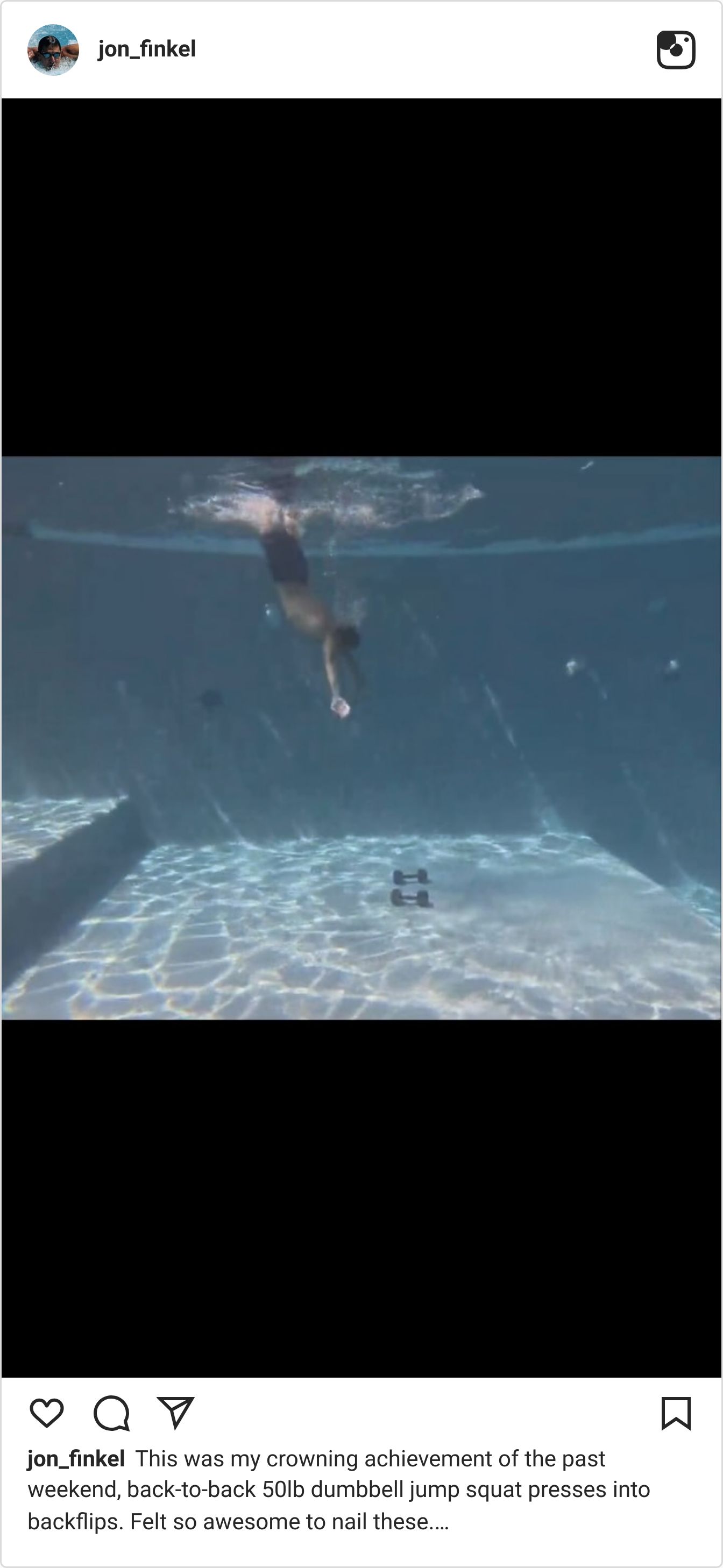
The breath hold on the second one is intense haha… This kind of training combined two of my favorite things: lifting heavy stuff and swimming. I knew Laird had a pool built specifically for this in Malibu. Twenty five yards long. Twelve feet deep. Different platforms underwater at 6’, 8’, 10’ and 12’ and a ramp that goes from 3’ all the way down to twelve. My buddy and partner at Midlife Male, Greg Scheinman, had trained with Laird and found the only other pool like it in the US, which was near him in Houston.
When we were talking about what to do with our guys for our Excellent Adventure #2, you know my vote: underwater weight training. This past weekend we did it. Twelve dudes. Our instructor Justin and a boatload of dumbbells, heavy ass rucksacks, slam balls, bands and more. Three two-hour sessions. Breathwork then hauling, crawling, jumping and lugging all the weights along the bottom of the pool while working on controlling our breath holds and not drowning... Such an amazing training experience and also filled our simple goal of doing cool shit with cool guys. Some were comfortable in the water and some weren’t to start. But by the end of the first session, everyone was rucking 55 pound sacks in 10 feet of water like champs. Highly recommend!
STRONG LINKS
If you’re a guy over 40 and you’ve been looking for a new digital magazine that’s written for midlife men, by midlife men, on the topics that actually matter to us: family, fitness, fashion, finance, food & fun, then join us at Midlife Male.
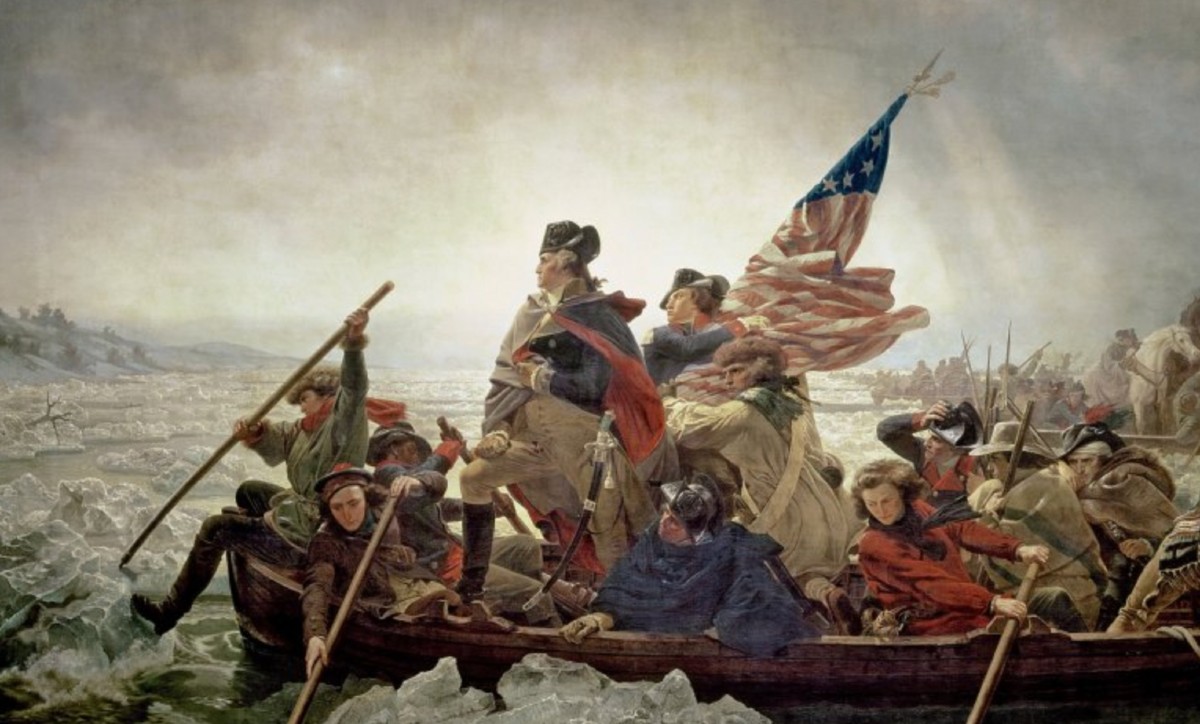
I’m the Editor-in-Chief and I write a column every Tuesday called The Manologue. And since it’s America’s 250th birthday this weekend, I wanted to write a column celebrating the coolest physical feats of perhaps our most physically impressive president, George Washington:
Thank you to every reader who pre-ordered my upcoming thriller in time to get your name IN the book. I delivered the final, edited manuscript Wednesday night and you are officially Books & Biceps Hall of Famers. I can’t wait for you all to read it on November 10th and we’ve got a TON of other giveaways coming up, so the pre-order train continues!
GRAB YOUR COPY OF BEAR BRAWL:

Jon Finkel is the award-winning author of Macho Man: The Untamed, Unbelievable Life of Randy Savage, 1996: A Biography, Hoops Heist, The Life of Dad, Jocks In Chief, The Athlete, Heart Over Height, “Mean” Joe Greene and more. His books have been endorsed by everyone from Mark Cuban, John Cena and Tony Dungy to Spike Lee, Kevin Durant and Chef Robert Irvine. He has written for GQ, Men’s Health, Yahoo! Sports, The New York Times and has appeared on CBS: This Morning, Good Morning Texas, Good Morning Chicago, and hundreds of radio shows, podcasts and streams. Jon was recently profiled in The New Yorker about the awesome community he’s built around his Books & Biceps newsletter. They describe him as “a gym rat’s Reese Witherspoon”. Reply to this email for any media requests. He is the Editor-in-Chief of Midlife Male and a Top 10 US Masters Swimmer in the 50 and 100 butterfly.
Sponsorship Opportunities
→ WANT TO BOOK THE TITLE SPONSORSHIP FOR JUNE???? Get in front of 29,000 awesome readers who focus on: reading, wellness, fitness, nutrition, entertainment, sports and more!
Previous sponsors include Nike, Random House, Netflix, Huel, HubSpot, SFH Nutrition, La Touraine Watches, Precision Skincare and more…
Download our media kit here:

→ Reply to this email for rates and availability.